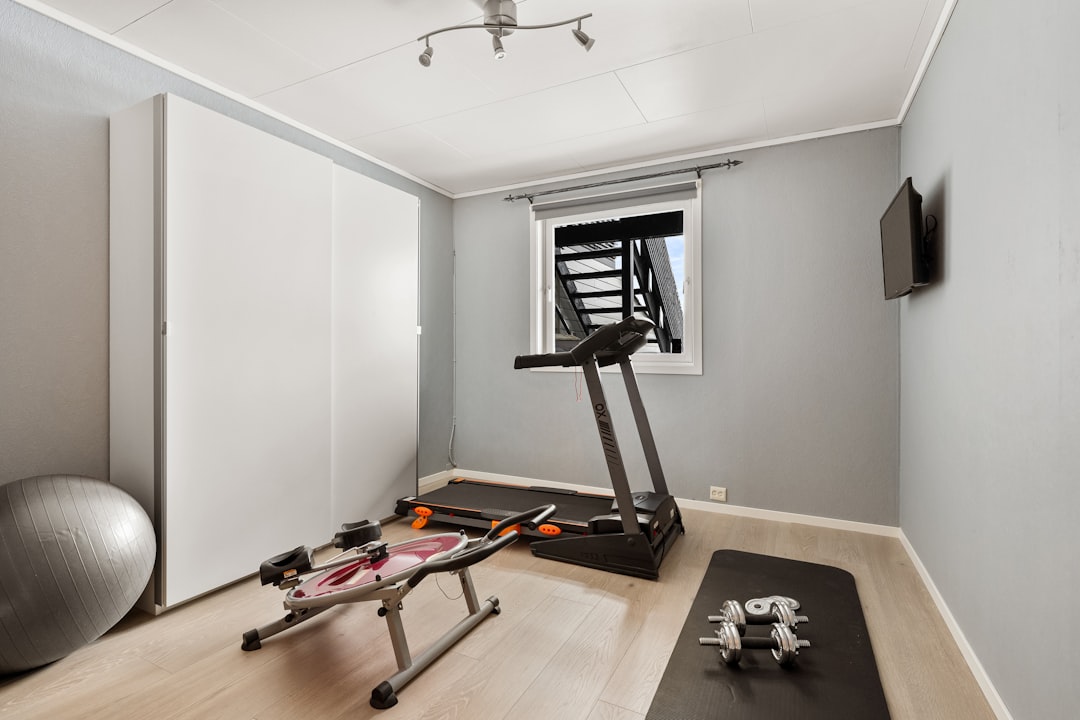
What a useful small home gym actually delivers
Focus on two outcomes: a safe place where you can do a consistent mix of strength and mobility work, and a setup that’s low-friction for daily use. You can safely ignore expensive, single-use machines, giant racks, or trying to fit a garage-style setup—those aren’t necessary for a practical small home gym in a bedroom or apartment.
By the end of this guide you’ll know how to measure your space, choose protective flooring and neighbor-friendly equipment, arrange a layout that clears circulation, and pack gear into compact storage so the room still functions as a bedroom or living space.
Set up a small home gym: the finished result
Picture one clear 6–15 ft² patch of floor (even a 2×3 m corner works) with a low-profile mat, 1–2 pieces of versatile resistance equipment, and one storage location that takes seconds to access. That’s enough for strength, cardio intervals, core work and mobility without daily setup friction.
Measure and plan: what you actually need to know
Measure the floor footprint you can spare when the bed is made and doors open. Note ceiling height (for overhead movements and suspension trainers), door swing, and where plugs are for a small fan or bike charger. For floors, check if you’re on wood, laminate, concrete or carpet—each affects choice of mat and noise control.
Protect the floor and the neighbors first
Flooring and noise control make or break an apartment gym. A solid, dense interlocking mat (6–10 mm rubber for light weights, thicker for dropping heavier items) prevents damage and reduces noise transfer.
For shared buildings, add a thin layer of underlayment or rug beneath mats to cut impact noise. Keep cardio low-impact (bike, rower, or step intervals) rather than frequent jumping in thin-floor buildings.
For a deep-dive on flooring choices, see our guide to interlocking gym mats.
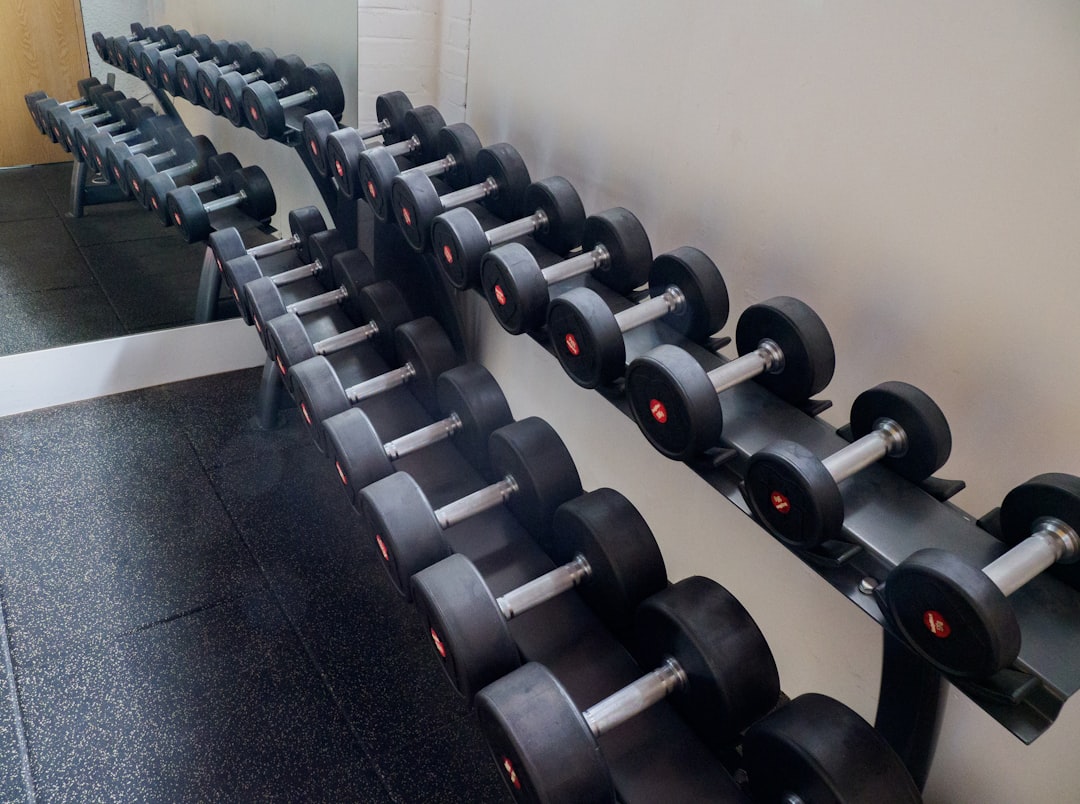
Choose compact, versatile equipment
Prioritize versatility per square foot. Good options that cover most training goals:
- One set of adjustable dumbbells or a small fixed set — replaces multiple barbells and plates.
- Resistance bands and a door anchor — excellent for pull patterns, mobility and assistance work.
- Suspension trainer (door-anchored TRX-style) — bodyweight rows, presses and core work without a rack.
- Small foldable bench or an armless adjustable bench if you press or do split squats.
- Yoga mat for mobility and floor-based core work.
Adjustable dumbbells are especially space-efficient if you want to train strength without a rack or barbell. They provide a wide range of weights while taking up the footprint of a single dumbbell. Consider a set when your priority is compactness and progressive loading.
Layout and storage that keep the room functional
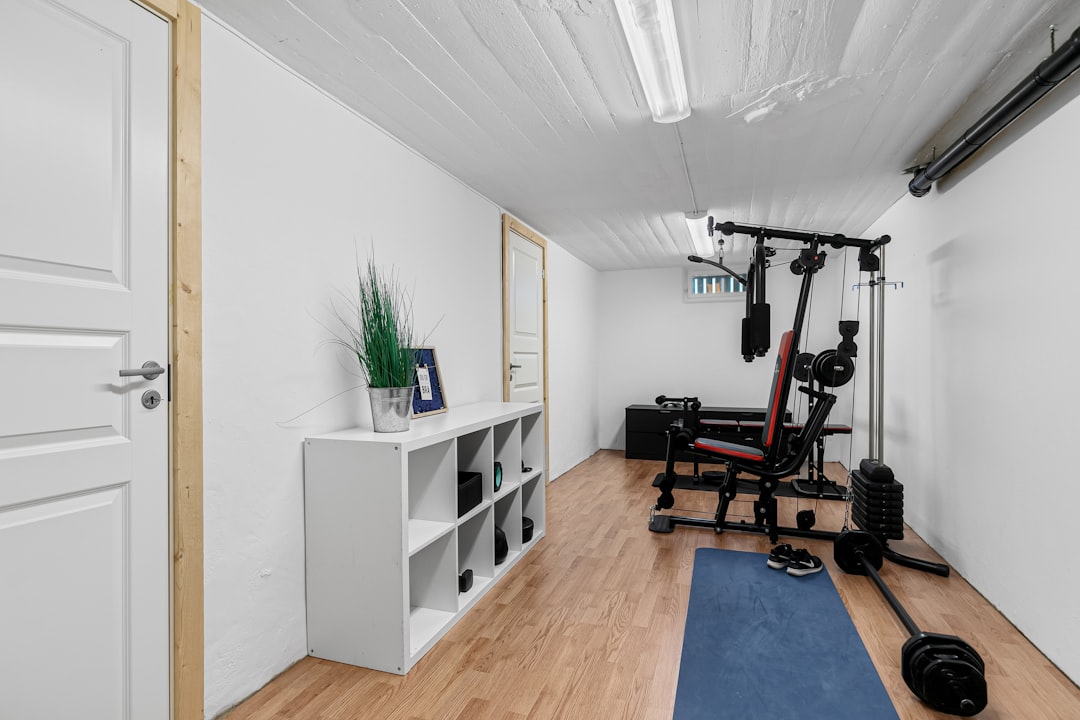
Place the mat where you have the most headroom and at least 2–3 ft (60–90 cm) of clearance in front for lunges and swings. Store equipment vertically or on narrow racks to preserve floor area: a slim dumbbell tray, wall hooks for bands, and a fold-up bench against the wall are all space-savers.
Use multiuse furniture: a trunk at the end of the bed can hold kettlebells and towels; an open shelf can double as a shoe bench and gear rack.
Daily workflow: reduce setup friction so you actually train
The number-one reason small gyms gather dust is setup friction. Keep one ready mat, one pair of dumbbells at a reachable height, and bands on a hook. If a workout takes under two minutes to assemble, you’re far more likely to do it often.
Lighting, ventilation and comfort
Small spaces get stuffy. A compact, quiet fan improves airflow without needing to open a noisy window. Good lighting keeps you motivated and reduces the risk of mis-loading weights in dim corners.
Safety and neighbor-friendly adjustments
Use controlled tempos when lifting heavy rather than dropping weights. If you must use heavier loads, add more padding and avoid movements that require dropping. Check your building rules for noise or weight restrictions if applicable.
Adapting when space or budget is tighter
If you have only a tiny patch (2×3 ft): rely on bands, bodyweight circuits and isometric holds. If budget is tight: buy one adjustable dumbbell or a resistance kit first, then add a bench or mat later. For ideas on starting small, our guide on building a home gym on a budget helps prioritize buys.
Troubleshooting common setups
- If your floor creaks: place a dense mat plus carpet underlayment under equipment and avoid ballistic moves.
- If you lack ceiling height for overhead presses: switch to seated or floor-based alternatives, or use bands for vertical pull/press patterns.
- If storage is the issue: rotate gear seasonally—keep just the most-often-used items in reach and store extras under bed or in a closet.
Maintenance and longevity
Wipe rubber and neoprene handles weekly, check adjustable dumbbell mechanisms monthly, and re-torque any bolts on foldable benches. Regular care prevents small faults from becoming safety hazards.
- Measure and mark the usable workout footprint and ceiling height.
- Choose at least one dense floor mat and a noise-reducing underlayer if needed.
- Pick 1–2 core equipment pieces (adjustable dumbbell + bands or suspension trainer).
- Plan vertical storage or a slim rack that keeps gear ready-to-use.
- Confirm ventilation, lighting and neighbor noise limits.
- Schedule a monthly equipment safety check.
A compact, effective home gym in a bedroom or apartment is about choices that maximize utility per square foot: protect the floor, choose versatile equipment like adjustable dumbbells and bands, reduce setup friction, and store vertically. Start with the minimum you’ll use daily and add only when it solves a clear need.
How much space do I really need?
You can run useful workouts in a 6–15 ft² clear area; 2×3 m is comfortable. Ceiling height matters for overhead and swinging movements—allow at least 8 ft (2.4 m) where possible.
Are adjustable dumbbells worth it for small spaces?
Yes—adjustable dumbbells replace a rack of fixed weights and free up floor and storage space while allowing progressive loading.
What flooring thickness should I choose?
For bodyweight and light dumbbell work, 6–8 mm rubber or dense foam is fine; for heavier weights or occasional dropping, use thicker (10–15 mm) or layered mats with underlayment.
Can I do cardio in a bedroom without disturbing neighbors?
Yes—choose low-impact cardio (stationary bike, rower, fast walking on the spot) and avoid regular jumping; add extra underlay for impact damping.
How do I store a bench or large gear in a small room?
Look for foldable benches that stand vertically, use under-bed storage for odd-shaped items, or invest in a slim wall-mounted rack to free floor space.