Many beginners think you need heavy plates or a garage gym—what actually works
Yes, you can make meaningful strength gains without a commercial gym. Strength training at home is effective if you pick the right exercises, use progressive overload, and pay attention to form and recovery. This guide gives the shortest path from “I want to start” to a consistent, safe routine you can keep doing.
Strength training at home: the essential plan for a true beginner
Quick answer: pick compound movements that work large muscle groups, train 2–4 times per week, and increase challenge gradually. Below is a compact, practical setup and a sample routine you can start with today.
What you need and why
- Bodyweight baseline: push-ups, squats, lunges, glute bridges, planks—these teach movement and build initial strength.
- One or two small pieces of gear to add resistance and variety: resistance bands and one adjustable dumbbell (or a pair of light-to-medium dumbbells).
- A mat and clear floor space (6–8 feet long) and a sturdy chair for support or step-ups.
Why bands and dumbbells work for beginners
Resistance bands are cheap, portable, and let you load rows, presses, and hip hinges progressively. Dumbbells let you practice unilateral strength and do weighted squats, lunges, presses and deadlifts once bodyweight gets easy. Together they cover nearly all beginner needs.
Use bands for early progressions and warm-ups; add dumbbells for clear, incremental weight increases when you can do 12–15 reps comfortably.
Simple, repeatable beginner routine (30–45 minutes)
Do this full-body routine 2–3 times per week (e.g., Monday/Thursday or Monday/Wednesday/Friday). Aim for 48 hours between sessions for the same muscle groups.
- Warm-up (5–8 min): brisk walking or marching in place, arm circles, hip hinges with bodyweight, and band pull-aparts (2 sets of 10).
- Main circuit—3 rounds, rest 60–90s between rounds:
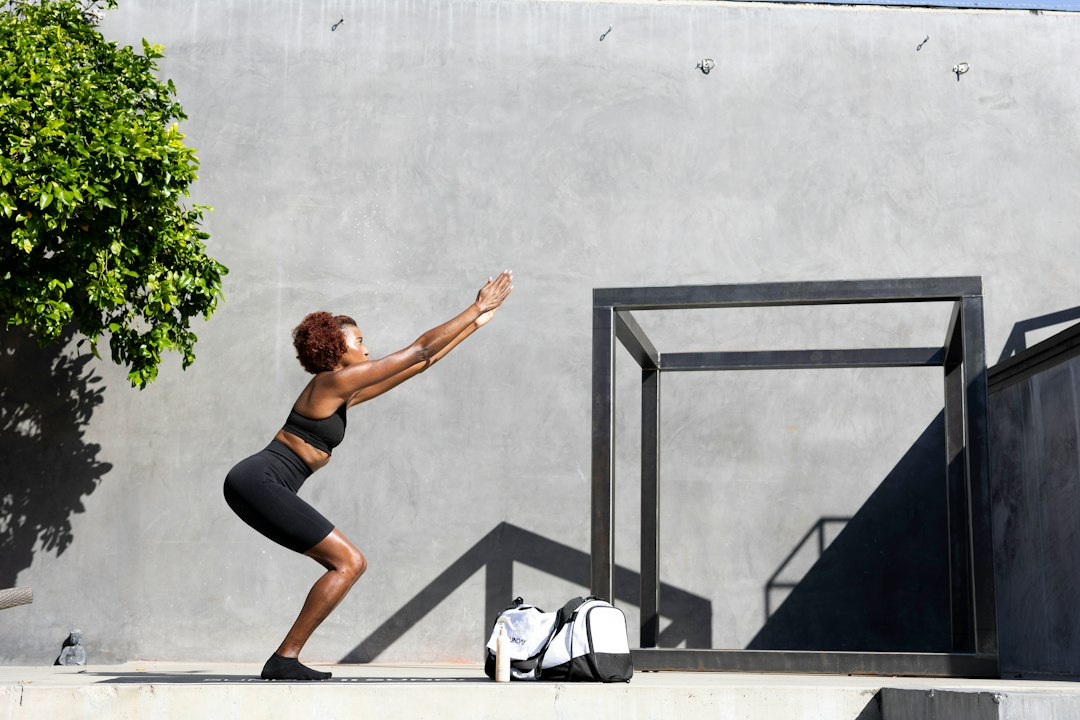
- Squat (bodyweight or goblet with dumbbell) — 8–12 reps
- Push-up (knee or full) — 6–12 reps
- Bent-over row with band or dumbbell — 8–12 reps each side
- Walking lunges or static split squat — 8–10 reps each leg
- Plank — hold 20–45 seconds
- Cool-down (5 min): light stretching for hips, chest and hamstrings.
How to progress safely and effectively
Progression = more work than your body is used to. For beginners the simplest levers are:
- Reps: add 1–3 reps per set each session until you reach the top of the range (e.g., 12–15), then increase load.
- Load: switch from bands to dumbbells, or increase dumbbell weight or band tension.
- Quality: improve range of motion or slow the eccentric (lowering) phase to raise difficulty without extra weight.
When to add more weight
If you can complete the chosen reps with good form and minimal fatigue for two workouts in a row, increase resistance. For bands, shorten the band or step wider to increase tension; for dumbbells, move up to the next available weight.
Common beginner mistakes and how to avoid them
- Rushing technique: prioritize a controlled range of motion over higher reps with poor form.
- Skipping recovery: strength gains happen outside the workout—sleep and one or two rest days matter.
- Chasing variety: stick with a few core movements for 8–12 weeks before swapping them—progressive overload needs consistent practice.
Safety essentials and where to learn more
Use a mirror or record yourself to check form, keep space clear, and use anchors and bands rated for exercise. If lifting heavier or training alone, learn safe handling and spotting alternatives. For more on safe setup and training alone, see our Home Gym Safety Guide. If budget or space is a constraint, our home gym on a budget guide helps prioritize purchases.
[h2]Wrap-up and next steps
Pick the routine above, choose either bands or a modest dumbbell set, and schedule three sessions for the next two weeks. Track reps and perceived effort—if workouts become easy, increase reps or resistance.
- Choose 1–2 pieces of gear (resistance band, one adjustable dumbbell)
- Schedule 2–3 full-body workouts per week
- Learn and record one rep of each movement to check form
- Log reps/weight and aim to progress every 1–2 weeks
- Prioritize sleep, protein, and two full rest days weekly
You don’t need a gym to build strength. Start with compound bodyweight moves, add bands or a single dumbbell for progressive overload, and keep workouts frequent but short. Focus on consistent progression and safe form to get lasting results.
How long until I see strength improvements?
Beginners often notice strength and functional changes in 4–8 weeks with consistent training and progressive overload; visual muscle changes can take longer depending on nutrition.
Can I build muscle with only bodyweight exercises?
Yes—initially. Bodyweight work can build strength and muscle up to a point; once you can do high reps easily, add external resistance to continue growth.
How many days per week should a beginner train?
Two to three full-body sessions per week is a practical, effective starting point for most beginners.
Do I need to warm up before strength workouts?
Yes. A 5–8 minute warm-up that raises heart rate and includes movement patterns you’ll do is important to reduce injury risk and improve performance.
What if I have joint pain doing an exercise?
Modify the movement to reduce pain (e.g., knee push-ups, reduced range), reduce load, and consult a healthcare professional if pain persists.